For sale
$250,000
Financed: $160,000 down + 36 cuotas de $2,500
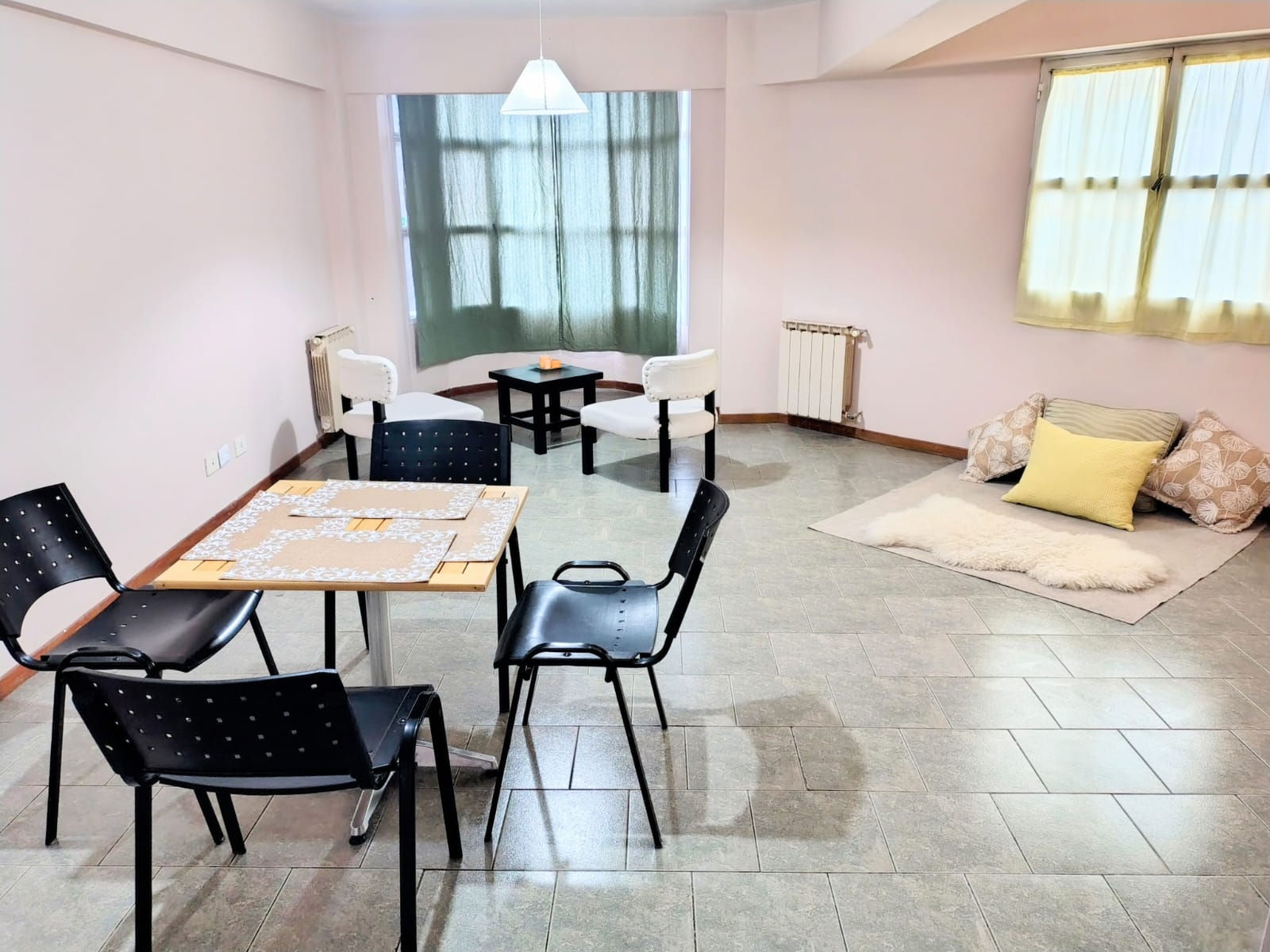
Dueño Vende Amplio Departamento Duplex/ Centro de Bariloche/ 100m2, 3 Dormitorios + Cochera
Apartment · Centro
- 3Bedrooms
- 2Bathrooms
- 100 m²
The town centre between Mitre, the Centro Cívico and the lakefront. Everything on foot, and the only part of Bariloche where you can live without a car.
Bariloche's centre is a small, dense rectangle. North to south, it runs from the Nahuel Huapi lakefront up to the escarpment where the city starts to climb; east to west, roughly from the Ñireco stream to Km 1 of Avenida Bustillo. Walking it from end to end takes twenty minutes.
That scale is the fact that shapes everything else. It is the only part of Bariloche where you can live without a car, and that defines who buys and who rents here.
The Centro Cívico, a set of stone and timber buildings facing the lake, is the city's point of reference. From there Calle Mitre runs downhill, concentrating the shops, the chocolate makers, the banks and most of the foot traffic.
One block off Mitre the tone already changes: residential streets with buildings of three and four storeys, many from the 1970s and 1980s, and old houses that have been converted. The difference in noise between the pedestrian street and the parallel one is far greater than the map suggests.
Everything you need is within walking distance: supermarkets, pharmacies, banks, the city bus terminal, and the regional hospital a few blocks away. That counts for more in winter than in summer, because with snow or ice on the road, depending on a car becomes a real problem.
Bariloche does not have one climate: it has a gradient. On the border with Chile, around Puerto Blest and Lago Frías, something in the order of 4,000 millimetres of rain falls a year and Valdivian rainforest grows. Fifty kilometres east, out on the steppe, it is close to 300. The whole city sits inside that slope, and the centre is at the dry end: around 600 millimetres a year, concentrated in autumn and winter.
For a buyer, that translates into concrete things. The centre has fewer rainy days and less humidity than the west, so exterior timber lasts longer and mould appears less often. In exchange it has less shelter: it is an area open to the westerly wind, with less forest to break it.
Snow settles less than on the hillside or at Catedral, but in July the real problem in the centre is a sloping street covered in ice, not the snowfall itself. A block with a good north-facing slope clears itself by midday; the same block facing south stays icy for a week.
Orientation matters more than square metres. In the southern hemisphere the sun comes from the north. A north-facing flat with a lake view gets sun all day in winter and costs less to heat. The same flat facing south, in the same building, is a different product at a different price.
This is the part no listing includes, and it decides how much the home costs to live in every month.
Natural gas. The centre is inside the served area. What has changed matters more than that: in July 2022 Camuzzi had to restrict new connections because the necessary infrastructure had not been built, and that restriction lasted more than three years. Only on 5 January 2026 were approvals for new connections released across the whole Andean region, following the interconnection of the Gasoducto Patagónico with the Gasoducto General San Martín and the construction of new compressor plants. If you are looking at a property without a connection, today the question has an answer; between 2022 and 2025 it did not.
Water. Here it is supplied by Aguas Rionegrinas. That sounds obvious, but it is not: Bariloche at one point had around twenty different water tariffs depending on the neighbourhood, because much of the west is supplied by systems run by neighbourhood associations (juntas vecinales). In the centre, then, the bill comes from the provincial supplier and not as a neighbourhood levy that is adjusted separately.
Sewerage. The centre is connected to the mains network, which is run by the Cooperativa de Electricidad Bariloche. That makes a difference in cost and in design freedom compared with areas on septic tanks, where the soil and the free space available limit how much you can build.
Electricity and internet. Urban grid and the best fibre coverage in the city. If the buyer works remotely — and many of those who have bought in Bariloche since 2020 do — the centre is where there is least to check.
Getting around. It is the only area where you can do without a car. Everything else in Bariloche is organised around having one.
The centre has the highest turnover in the city and the most liquid stock. A well-located flat does not usually stay on the market for long, whether for sale or to let.
Three types of demand coexist and compete for the same stock:
Long-term rentals. People who work in the city and would rather not depend on a car. It is stable demand all year round and the least visible on the property portals, because much of it moves by word of mouth.
Short-term rentals. The centre is the first thing anyone coming for a week looks for. That pushes prices up and takes units out of the long-term market, especially between June and September and in January.
Investment. Small units — studios and one-bedroom flats — bought to let. It is the most sought-after product and the one least often built.
What people search for most in this area is exactly that: flats for sale and flats to rent. Plots and houses come up far less often, because there are hardly any left.
Orientation and sun. In winter the sun is low and the blocks in the centre have buildings of varying heights. A south-facing unit with a building opposite may get no direct sun all winter. You notice it on the heating bill and you notice it in daily life.
Heating. Natural gas or balanced-flue heaters changes the monthly cost substantially. Always ask which system the unit has and whether the building owes money on its gas account.
Expensas. The expensas — the monthly service charge paid to the building — can include central heating in older buildings, which pushes the figure up but lowers your own spending. Comparing expensas between buildings without knowing what they include tells you nothing.
Noise. The blocks on Mitre and the streets immediately parallel to it have night-time activity. If the unit is to live in rather than to let, it is worth visiting on a Friday night.
Parking. Many central buildings have no garage. In a city where almost everyone ends up needing a car to get out of town, that counts.
Is it worth buying in the centre for short-term letting? It is the area with the highest turnover and the one least dependent on the season. The downside is the competition: it is also where there is most supply. And you need a municipal licence: tourist letting is regulated, with its own categories — Casa de Alquiler Turístico and Departamento de Alquiler Turístico — and registration with the municipality. Buying with short lets in mind without checking whether the unit can be licensed is the expensive mistake.
Are there flats with a garage? They are the scarce commodity in the centre. Most of the stock predates current parking requirements. In winter, a covered garage stops being a mere convenience.
How much are the expensas? They vary a great deal with the building's age and with whether it has central heating. A building with a central boiler and good insulation can end up cheaper than one with no expensas and individual gas heating.
Is it noisy? The blocks along the commercial strip and around the nightclubs have real nightlife. Two blocks further up, it is a different neighbourhood. It is worth seeing the property on a Friday night, not on a Tuesday at midday.
People who work in the city and do not want to depend on a car. Investors in rental property who want the most liquid location. And those who come for a short season and would rather walk than drive in the snow.
It is not for anyone looking for land, quiet or an open view. For that you have to head west along the Bustillo or east along Ruta 23.